
OUR INNOVATION
SunCoke Energy Design
Superior technology
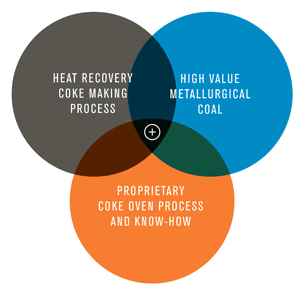
We are a technological leader in cokemaking. Our advanced heat recovery cokemaking process has numerous advantages over by-product cokemaking, including producing higher quality coke, using waste heat to generate derivative energy for resale and reducing environmental impact. Our technological advances have created distinct advantages that improve iron and steelmaking economics and enhance environmental performance.
A better cokemaking process
SunCoke Energy’s ovens operate on a regenerative principle that transforms coal into a solid state carbon (coke) and volatile matter into gases. While under negative pressure the toxic gases are thermally destroyed during the coking cycle – limiting the environmental impact and making the SunCoke Energy process one of the best available environmental control technologies.

A horizontal bed of coal approximately 1 meter deep, 4 meters wide and 14 meters long is charged into the side of a hot oven using a leveling conveyor. Immediately after charging, the coal absorbs heat from the surrounding refractory. Volatile matter in the coal is driven from the bed and combusted, transferring heat from combustion back into the refractory. Partial combustion of volatiles occurs in the oven crown above the bed. Gases are then drawn into sole flues beneath the oven floor where more air is introduced to complete the combustion and provide underfiring to the oven. This permits carbonization from the top and bottom at equal rates. Overall, heat is neither gained nor lost by the refractory over a normal coking cycle. This feature allows our ovens to be a self-sustaining operation without any requirement for auxiliary fuel.
SunCoke Energy uses large batch coal charges and 48-hour coking cycles. This combination minimizes machine usage, frequency of door removal, and thermal cycling of the ovens. The result is prolonged life of the plant and reduced operating and maintenance costs. Additionally, the oven's large thermal reservoir stabilizes the process, requiring only one combustion air rate adjustment in an eight-hour shift.
Oven design
SunCoke Energy's heat-recovery ovens are constructed using just 115 brick shapes, robust walls and arches and simply cast structural slabs. This simplicity greatly increases construction productivity and quality of work. The ovens are computer monitored, so operators can remotely control the operation of each oven to fine-tune the coking process.
Our unique horizontal oven design also eliminates concern about lateral expansion pressure, so "stickers," coke that becomes lodged against oven walls during the pushing out of the finished product, are not an issue.
Coke Quality
SunCoke Energy’s heat-recovery cokemaking process produces high quality coke. Coke produced from our technology exhibits a large average coke size, high coke cold strength and consistently high coke strength after reaction, or CSR, values. These measures are important means of evaluating the quality of metallurgical coke.
Use of metallurgical coke with higher CSR values enhances iron and steel-making economics by improving blast furnace productivity. Coke quality improvements enhance blast furnace permeability and permit blast furnace operators to safely increase their furnace's supplemental fuel, reduce coke charge rates and increase the volume of hot metal produced.
Power Generation (Cogeneration)
SunCoke Energy's heat recovery cokemaking process converts waste heat from the coking process into steam and electricity. Pollutants (volatile matter) generated in the long hours of baking coal are incinerated inside the coke ovens, eliminating the need for a chemical by-products plant and disposal of hazardous waste. This cogenerated electricity is either consumed on-site or transmitted to others for use.
Sole flues and hot gas ducts provide sufficient time, temperature and turbulence to ensure complete destruction of virtually all organic compounds, creating hot inert gasses. The negative pressure employed by SunCoke Energy's ovens pulls air into the oven through air ports on each oven door and sole flue, and the movement of air through the oven maximizes temperature. Excess heat is converted to steam and/or electricity through heat recovery steam generators and steam turbines. A typical head recovery facility that we designed and operate with 1.1 million tons of coke per year can generate approximately 90 megawatts of electric power per hour.
Research and Development and Intellectual Property and Proprietary Rights
Our research and development program seeks to develop promising new technologies for cokemaking as well as improvements to our cokemaking and heat recovery processes. Over the years, this program has produced numerous patents related to our heat recovery coking design and operation, including patents for pollution control systems, oven pushing and charging mechanisms, oven flue gas control mechanisms and various others.